BOAT= Break Out Another Thousand. So it seems.
Well, Saturday I changed out the starting battery on my boat and then hooked up the charger to make sure it was fully charged. When I went back out the power pole was down. And there was hydraulic fluid all over in the battery compartment.
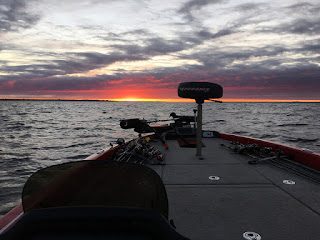
I taped up the pole so it stayed in the upright position and went fishing. I was hoping to take advantage of the super moon.
Unfortunately, we had heavy cloud cover so the moon was hidden. We fished to a little before midnight.
We only caught a few so it was not what I'd hoped for.
Monday night after work I looked at the hydraulic hoses on the power pole. I found a big hole in one of the lines.
I need to replace the line. Did you know the fluid they use is biodegradable? That's cool. But it's also the same viscosity as transmission fluid. If you ever are in a pinch and need fluid for your power pole, keep this in mind.
Update: I finally figured out why the hydraulic hoses kept bursting. The hose came out from under the rub rail cap, which kinked them. So, under the higher pressure, the hoses weren't holding up. I relocated the hoses and have had no problems since.
Supermoon and bass fishing
I've never fished a Supermoon, have you? I think I'll try hitting Lake Austin Saturday night from late afternoon until midnight or so. Lake Austin in Central Texas is very popular with wake boarders and water skiers so when it gets warm outdoors, it is very difficult to fish and some might say dangerous during the day. I prefer to fish it at night in summer.
This is one lake where the trophy potential is really high, but the number of fish you catch (at least for me) is not very high. I really struggle there. I think I'm fishing in the right areas, but I'm doing something wrong.
Is it my presentation or lures or both? I know some big fish are taken on Senkos there, but my biggest L. Austin bass has come with my favorite lunker lure, the 10-inch Power Worm. I caught that one last summer about 3 a.m. (See my post from May 3 on how I rig the Power Worm.)
I've had some good L. Austin fish on that I've lost while using Senkos, but I am working on refining my technique; and I'm thinking I'm getting close to finding the right hook for those too. Lately, I've been experimenting with 6/0 and 7/0 wide gap Owner hooks for 6-inch and 7-inch Senkos; and my landing rates are going up.
I think the bigger Senkos ball-up more when a bass inhales it, so the bigger hook gets better results. Again, I'm thinking big fish when I go to some of these lakes so I don't want to chance losing one when it does hit. Big baits = big bass, or as we say here, Go Big or Go Home!
For 5-inch Senkos, the 5/0 Owner or Gamakatsu hooks are working well for me.
I switched to the big hooks last fall on one of my trips to Falcon, and I was really impressed on how well the bigger hooks worked. Best part is they are the same hooks I'm using with Zoom Magnum Flukes so I don't have to retie, if I switch plastics. This time of year and until fall, I'm fishing at night a lot, so the bigger hook does not effect the way the fish react to the Senko.
Last summer I lost several good bass on L. Austin at night because I was using 5/0 hooks on the 6- and 7-inch Senkos. I'm sure I wasn't getting a good hook set.
I fish these Texas rigged, weight less. I patiently wait for the bait to get down to the depth I want rather than putting on a bullet weight. If I feel a need to put on a big weight, I'll fish the Power worm.
And I've gone to heavier line and heavy-action Kistler rods for big throwing Senkos. (By the way, it is amazing how far you can cast a 7-inch Senko — even with 20-pound line.)
A few days ago, I posed a question on a fishing forum of what month Texas anglers have caught their personal-best bass. Every month was mentioned multiple times (and there were many replies), so it is encouraging. Normally, we think once the spawn winds down, the chance of getting a big bass diminishes too. Not so, at least not in Texas.
This summer I plan on fishing Lake Austin and Choke Canyon at night much more. When I get on a good pattern, I'll keep you in the loop.
This is one lake where the trophy potential is really high, but the number of fish you catch (at least for me) is not very high. I really struggle there. I think I'm fishing in the right areas, but I'm doing something wrong.
Is it my presentation or lures or both? I know some big fish are taken on Senkos there, but my biggest L. Austin bass has come with my favorite lunker lure, the 10-inch Power Worm. I caught that one last summer about 3 a.m. (See my post from May 3 on how I rig the Power Worm.)
I've had some good L. Austin fish on that I've lost while using Senkos, but I am working on refining my technique; and I'm thinking I'm getting close to finding the right hook for those too. Lately, I've been experimenting with 6/0 and 7/0 wide gap Owner hooks for 6-inch and 7-inch Senkos; and my landing rates are going up.
I think the bigger Senkos ball-up more when a bass inhales it, so the bigger hook gets better results. Again, I'm thinking big fish when I go to some of these lakes so I don't want to chance losing one when it does hit. Big baits = big bass, or as we say here, Go Big or Go Home!
For 5-inch Senkos, the 5/0 Owner or Gamakatsu hooks are working well for me.
I switched to the big hooks last fall on one of my trips to Falcon, and I was really impressed on how well the bigger hooks worked. Best part is they are the same hooks I'm using with Zoom Magnum Flukes so I don't have to retie, if I switch plastics. This time of year and until fall, I'm fishing at night a lot, so the bigger hook does not effect the way the fish react to the Senko.
Last summer I lost several good bass on L. Austin at night because I was using 5/0 hooks on the 6- and 7-inch Senkos. I'm sure I wasn't getting a good hook set.
I fish these Texas rigged, weight less. I patiently wait for the bait to get down to the depth I want rather than putting on a bullet weight. If I feel a need to put on a big weight, I'll fish the Power worm.
And I've gone to heavier line and heavy-action Kistler rods for big throwing Senkos. (By the way, it is amazing how far you can cast a 7-inch Senko — even with 20-pound line.)
A few days ago, I posed a question on a fishing forum of what month Texas anglers have caught their personal-best bass. Every month was mentioned multiple times (and there were many replies), so it is encouraging. Normally, we think once the spawn winds down, the chance of getting a big bass diminishes too. Not so, at least not in Texas.
This summer I plan on fishing Lake Austin and Choke Canyon at night much more. When I get on a good pattern, I'll keep you in the loop.

Falcon Lake, TX — the best bass lake in the country? It was, but it may be coming back.
Most of us know by now that Bassmaster magazine named Falcon Lake the best bass lake in the country. I must agree. My two sons and my son-in-law (and I) have caught our personal bests there in the last year. One of the fish was a ShareLunker. (For those of you not familiar with the Texas program, a ShareLunker is a 13-pound-plus bass that is contributed to Texas Parks and Wildlife to be used in their selective breeding program, with an intent to grow unusually large Florida strain bass. For details on the program, check TPWD's ShareLunker website.
Not every day is red hot however. Some days we really struggled. Here is a picture of an 8-plus my youngest son caught just moments before he caught the ShareLunker.
This was the third day of our trip and we were only going to stay half a day. Well, after a few hours fishing we caught 30 or more bass up to 13.36 pounds. That was more than we caught in the two previous days. The difference? The wind changed from the north to the south and the surface temperature went up several degrees. The fish really turned on for us.
Although we caught fish on a variety of baits, by far, the Strike King XD6 crankbait was the best for not only size, but numbers.
We found a ledge — by accident — that was full of fish.
How we retrieved the crankbait was the key. Just chucking and winding produced some small bass, but bouncing it through the rocks on the ledge and then stopping it when it came off the ledge is what made the biggest ones react — and they hit really hard. The ledge went from the bank sloping to about seven feet deep and then dropping straight off to another ledge out to 14 feet, finally dropping to more than 20 feet deep in the river channel.
Since then, we've caught fish every time we've fished that ledge. Unfortunately, it is not as good as it was. Some locals saw us catching fish from that spot in one of our trips and they have now taken up residence bank fishing there. They have been there every time I've been on Falcon lately.
Rocks and brush are some of the best places to look for big bass on Falcon, but I have also caught some really good ones on ledges with no brush and big trees. Not bushes but big trees. Many of the trees line river or creek channels, which makes them good places for a big one. But you may fish 20 or 30 trees for one or two big ones (if any).
I've broken off several good ones in the big trees on 65-pound braided line.
One other bait that is really working for me is Zoom Magnum Flukes. I'll talk about them some other time.
Hopefully, this will help you on your next trip to Falcon. If you have not been there, I think the next year is still going to be good. After that, I'm not sure what will happen.
Here is another trip report:
Not every day is red hot however. Some days we really struggled. Here is a picture of an 8-plus my youngest son caught just moments before he caught the ShareLunker.
 |
| This little fatty weighed about 8.5 pounds caught December 28, 2012. |
Although we caught fish on a variety of baits, by far, the Strike King XD6 crankbait was the best for not only size, but numbers.
We found a ledge — by accident — that was full of fish.
How we retrieved the crankbait was the key. Just chucking and winding produced some small bass, but bouncing it through the rocks on the ledge and then stopping it when it came off the ledge is what made the biggest ones react — and they hit really hard. The ledge went from the bank sloping to about seven feet deep and then dropping straight off to another ledge out to 14 feet, finally dropping to more than 20 feet deep in the river channel.
Since then, we've caught fish every time we've fished that ledge. Unfortunately, it is not as good as it was. Some locals saw us catching fish from that spot in one of our trips and they have now taken up residence bank fishing there. They have been there every time I've been on Falcon lately.
Rocks and brush are some of the best places to look for big bass on Falcon, but I have also caught some really good ones on ledges with no brush and big trees. Not bushes but big trees. Many of the trees line river or creek channels, which makes them good places for a big one. But you may fish 20 or 30 trees for one or two big ones (if any).
I've broken off several good ones in the big trees on 65-pound braided line.
One other bait that is really working for me is Zoom Magnum Flukes. I'll talk about them some other time.
Hopefully, this will help you on your next trip to Falcon. If you have not been there, I think the next year is still going to be good. After that, I'm not sure what will happen.
Here is another trip report:
Catching Giant Bass — The right hook for the job
Everyone enjoys bragging about their giant bass catches. For most of us, catching giant bass is a result of being "lucky" during the course of a day's fishing.
To the truly knowledgeable anglers, catching giants is no accident. I've caught my share of big bass — even in tournaments, but lately I've been concentrating on trying to catch giant bass even more.
I think the reason many people don't land more big bass is because they are fishing too light of tackle. I know, I know, lots of big bass are caught on light tackle. But since I've really honed in on fishing big, my landing ratio has gone up. Maybe I'm not hooking as many as some of the light tackle guys, but I don't believe it. Important however, the number coming in the boat has gone way up!
 |
| This was a 8.75 pound bass from Falcon Lake in April 2012. I got it on a 10-inch Power Worm. |
When I'm fishing an area or lake where I think my chances of getting a big one are highly probable, I use 25-pound Flourocarbon line (Seaguar Invizx), 10- to 12-inch Berkley Power Worms (Blue Fleck), half-ounce Tungsten weights (or more if it's windy), and a 7/0 Owner hook.
Lately, I have become convinced the 7/0 Owner hook has made a huge difference. It looks like a normal offset worm hook but it is over sized (not extra wide gap), just an over-sized worm hook. It has a really long shank.
 |
| Notice how the 7/0 hook would be embedded near the middle of the worm? It helps my hook-up percentage. |
When the bass picks up the worm, she usually grabs it in the middle at first and then sucks it in. The long-shank hook's barb is right where she grabs it.
I've caught numerous 6- to 10- (well almost 10) pound bass from Lake Austin to Falcon Lake to Lake Amistad in the last year using this setup.
There is an Owner 11/0 hook in the same style that should be used with 12-inch or larger worms.
I hope this helps your hook-up percentage too.
Texas ShareLunker program
Texas ShareLunker program: Florida strain of largemouth bass.
Yesterday I copied a recap of the latest season of the Toyota ShareLunker program from a TPWD press release. Overall, I think it was a mediocre season with only 13 bass turned in. However, anecdotal evidence suggests many more than that were caught at Falcon Lake, but never submitted to the program.
In Texas, a number of people are opposed to submitting to the ShareLunker program. A lot of those naysayers are in the Falcon Lake area, either residents or fisherman who travel there.
I understand their frustrations. (More on that later.) But since I was involved with ShareLunker number 525, I'm amazed at how much traction that one fish has gotten. The publicity has been nearly non-stop. The photo I took has been in TPWD press releases, Bassmaster magazine, Texas Parks & Wildlife digital fishing magazine and in numerous newspaper stories and online blogs and stories — not only in Texas, but all over the world. That is a lot of PR from one fish.
I'm not a biologist but I've been around them for many decades in my career. I do understand the goals and objectives of the program — biologically.
But from a PR perspective, the ShareLunker program is genius. There are not many programs that generate so much publicity. As a communications professional, it seems to me that the PR value alone is worth every effort that is put into the ShareLunker program.
How many tourism dollars does catching a big fish mean to Texas? I don't think it has ever been quantified, but it sure is a lot. I've been to Falcon a bunch in the last year. The number of out-of-state anglers (and international) I meet there is remarkable. Do you know how far away Falcon is from anywhere?
The arguments against the program have to do with costs, transporting, and the science. It is costly to move a fish from a lake like Falcon to the nearest TPWD hatchery, let along taking the fish to Athens, TX. Then there is the possible loss (death) of the fish while being transported and handled.
The arguments against the program when it comes to science is where the detractors lose traction. Many argue it is best to put the fish back and let mother nature take its course. But it is faulty logic to assume that one particular fish is going to produce lots of future 13-pound fish.
Outside a controlled environment, no telling which male bass the female is hooking up with. If it spawns with a northern strain or already Florida/northern cross, then the trophy potential of those offspring goes down drastically.
And, even if the bass mated with another bass with the "right" genes, the fry have very little chance of surviving. In terms of the biology, mating the female Florida bass with a male Florida bass and keeping the fry in a hatchery until they reach a certain size is what is going to produce the best outcomes.
As far as one of the other frustrations related to the program is the commitment that is required from the angler catching the ShareLunker. Once you realize it may take 7-12 hours for TPWD to pick up your fish, you will have doubts about whether you should submit the fish. Yes, it was a seven-hour wait for us, but it was worth every minute. I can't wait to get one of my own!
So now that the season is over, I'll lay out my strategy for next year. Should I make several trips to Falcon, or spend nearly every evening on Lake Austin next year? I'm leaning toward Falcon.
For more information:
Texas Parks & Wildlife magazine digital fishing special
See page 32.
Texas Parks & Wildlife magazine website (numerous articles about big bass in Texas)
Yesterday I copied a recap of the latest season of the Toyota ShareLunker program from a TPWD press release. Overall, I think it was a mediocre season with only 13 bass turned in. However, anecdotal evidence suggests many more than that were caught at Falcon Lake, but never submitted to the program.
In Texas, a number of people are opposed to submitting to the ShareLunker program. A lot of those naysayers are in the Falcon Lake area, either residents or fisherman who travel there.
I understand their frustrations. (More on that later.) But since I was involved with ShareLunker number 525, I'm amazed at how much traction that one fish has gotten. The publicity has been nearly non-stop. The photo I took has been in TPWD press releases, Bassmaster magazine, Texas Parks & Wildlife digital fishing magazine and in numerous newspaper stories and online blogs and stories — not only in Texas, but all over the world. That is a lot of PR from one fish.
I'm not a biologist but I've been around them for many decades in my career. I do understand the goals and objectives of the program — biologically.
But from a PR perspective, the ShareLunker program is genius. There are not many programs that generate so much publicity. As a communications professional, it seems to me that the PR value alone is worth every effort that is put into the ShareLunker program.
How many tourism dollars does catching a big fish mean to Texas? I don't think it has ever been quantified, but it sure is a lot. I've been to Falcon a bunch in the last year. The number of out-of-state anglers (and international) I meet there is remarkable. Do you know how far away Falcon is from anywhere?
The arguments against the program have to do with costs, transporting, and the science. It is costly to move a fish from a lake like Falcon to the nearest TPWD hatchery, let along taking the fish to Athens, TX. Then there is the possible loss (death) of the fish while being transported and handled.
The arguments against the program when it comes to science is where the detractors lose traction. Many argue it is best to put the fish back and let mother nature take its course. But it is faulty logic to assume that one particular fish is going to produce lots of future 13-pound fish.
Outside a controlled environment, no telling which male bass the female is hooking up with. If it spawns with a northern strain or already Florida/northern cross, then the trophy potential of those offspring goes down drastically.
And, even if the bass mated with another bass with the "right" genes, the fry have very little chance of surviving. In terms of the biology, mating the female Florida bass with a male Florida bass and keeping the fry in a hatchery until they reach a certain size is what is going to produce the best outcomes.
As far as one of the other frustrations related to the program is the commitment that is required from the angler catching the ShareLunker. Once you realize it may take 7-12 hours for TPWD to pick up your fish, you will have doubts about whether you should submit the fish. Yes, it was a seven-hour wait for us, but it was worth every minute. I can't wait to get one of my own!
So now that the season is over, I'll lay out my strategy for next year. Should I make several trips to Falcon, or spend nearly every evening on Lake Austin next year? I'm leaning toward Falcon.
For more information:
Texas Parks & Wildlife magazine digital fishing special
See page 32.
Texas Parks & Wildlife magazine website (numerous articles about big bass in Texas)
ShareLunker Bass in Texas
Bass Fishing in Texas (Toyota ShareLunker program)
After a long layoff, I decided to commit to update this blog more often. Today I'm posting the press release from Texas Parks and Wildlife ShareLunker program. In the future I'll be more creative, but I'm borrowing from the press release because I had my sons in my boat when one of them caught this season's ShareLunker Number 525 on December 28, 2011. My plan was to write about our various trips to Falcon and Amistad the last few months and this morning's press release was perfect timing.
This is my son, Jason's 13.36 pound ShareLunker.

I've been to Falcon nearly every month since last fall. I missed February, but I was there the end of January and March 2. In April I was there for 5 days straight and caught a bunch of big bass but I personally couldn't quite break the 10-pound mark. (but who knows how accurate our scales are. Unless we get them calibrated some how, we could be off. After my last trip, I had my scale checked and it was off by 8-9 ounces.
I wrote a story about our December ShareLunker experience that appeared in Texas Parks & Wildlife magazine's Texas Fishing 2012 digital magazine. Be sure to read that digital issue by following the link to it. My story is on pages 38-39.
The following is recap of the 20011-2012 Texas Toyota ShareLunker Season, which ended April 30. This was the 26th season of Texas Parks and Wildlife Department’s ShareLunker program.
[Quote TPWD] "Thirteen largemouth bass weighing 13 pounds or more were entered into the program during the season, bringing to 536 the number of big bass entered since the program’s inception in 1986.
"The season also saw the end of an era with the retirement of David Campbell, who had guided the program since its beginning and personally picked up most of the fish. Campbell was “Mr. ShareLunker” to hundreds of anglers.
"Campbell handed over responsibility for the program to TPWD fisheries biologist Juan Martinez at the end of March.
"The largest fish entered into the program this season was a 14.39-pounder caught from Falcon International Reservoir by Gary Wingate of Amarillo. Falcon was named the number one bass fishing lake in the nation by the editors of Bassmaster magazine.
"Wingate’s catch earned him Angler of the Year honors. In addition to the replica of his catch and ShareLunker clothing received by all anglers in the program, Wingate also will receive a lifetime fishing license and a prize package from G. Loomis valued at $818. The package includes a G. Loomis NRX854C jig and worm rod, a Shimano ChronarchD1007 casting reel and 150 yards of moss green Power Pro super-braid fishing line.
"The six lakes producing entries this season will also be winners. Each will receive a share of the offspring produced by the fish that spawned. To date Wingate’s fish and a fish caught by Stan Lawing from Ray Roberts have produced more than 132,000 fry. These fish will be divided among Lakes Fork, Falcon, Austin, Toledo Bend, Ray Roberts, and O.H. Ivie.
"One fish, Toyota ShareLunker 528, was a repeat entry. Originally caught by Carl Adkins from Lake Austin in 2010, it was recaught by Landon Glass on February 14. ShareLunkers have an electronic tag injected so that they can be identified.
"Lake Austin was the top-producing reservoir this season with five entries. Lakes Fork, Falcon and O.H. Ivie each had two. Ray Roberts and Toledo Bend each had one.
"It is known that some bass grow larger than others, but why remains unknown. TPWD is planning to conduct research to try to identify the gene or genes that may influence size in Florida largemouth bass. This research has never been done before. If this effort is successful, TPWD will be able to use that information to guide its breeding and stocking of largemouth bass in the future.
"'If we can identify the genetic markers that result in maximum growth, we can select broodfish that have those markers,” said Allen Forshage, director of the Texas Freshwater Fisheries Center. “The goal of the ShareLunker selective breeding program is to increase the occurrence and size of eight-pound or larger bass, and this research is the next step in that process.'
"Following is a chronological list of this season’s entries.
"Toyota ShareLunker 524 was caught from Lake Fork December 27, 2011, by Andrew Watson of Highland Village. The fish weighed 13.51 pounds and was 25.5 inches long and 21.25 inches in girth. The top producer of big bass in Texas, Fork came in at number 26 on Bassmaster’s list of top trophy bass lakes.
"Toyota ShareLunker 525 was caught December 28 from Falcon International Reservoir by Jason Brudnicki of Salt Lake City, Utah. The 13.36-pound fish was 26.25 inches long and 21 inches in girth.
"Toyota ShareLunker 526 came from Lake Austin on January 29, 2012. It was caught by Brett Ketchum of Austin and weighed 13 pounds even. It was 25.75 inches long and 20.25 inches in girth.
"Toyota ShareLunker 527 also came from Lake Austin. Wesley Hayden of Round Rock caught the 13.22-pounder on February 11. It was 26 inches long and 21.25 inches in girth.
"Toyota ShareLunker 528 made it three in a row from Lake Austin on February 14. The Valentine’s Day fish was caught by Landon Glass of Jarrell; it weighed 13.03 pounds and was 25.75 inches long and 21.75 inches in girth.
"Toyota ShareLunker 529 was caught by Ryan Pinkston of Center on February 25 from Toledo Bend Reservoir. The fish weighed 14.2 pounds. Due to an error the fish was released before it could be picked up, so length and girth are not known. Toledo Bend was named the number 15 bass lake in the U.S. by Bassmaster.
"Toyota ShareLunker 530 came from Lake Ray Roberts. Caught by Stan Lawing of Poetry on March 3, the 13.06-pound fish was 25 inches long and 21 inches in girth. The pickup and care of this fish will be featured on the World Fishing Network’s Reel Fishy Jobs on May 31. The fish spawned and produced more than 39,000 offspring.
"Toyota ShareLunker 531 was caught by Gary Wingate of Amarillo from Falcon International Reservoir on March 16. The 14.39-pound fish was 26.5 inches long and 20.75 inches in girth. ShareLunker 531 spawned twice and produced more than 93,000 offspring.
"Toyota ShareLunker 532 was caught by Michael Justus of Garland from Lake Fork on March 18. It weighed 13.1 pounds and was 25.75 inches long and 21 inches in girth.
"Toyota ShareLunker 533 took the ShareLunker flag back to Lake Austin. Corey Johnson of Cedar Park caught the 13.18-pound fish March 21. It was 26.5 inches long and 20 inches in girth.
"Toyota ShareLunker 534 also came from Lake Austin on the same day as 533. The 13.59-pound fish was caught by Charles Whited of San Marcos and was 26.125 inches long and 20 inches in girth.
"Toyota ShareLunker 535 marked O.H. Ivie’s return to the ShareLunker program. Stacy Brookings of Midland caught the 13.22-pounder on March 25. It was 26.5 inches long and 20 inches in girth. O.H. Ivie occupies the number 88 spot on the Bassmaster list of top bass lakes.
"Toyota ShareLunker 536 brought the season to a close on April 6. Kyle Johnson of Abilene caught the 13.36-pounder from O.H. Ivie. It was 27.5 inches long and 20 inches in girth. This fish was the only mortality of the program this season.
"Toyota ShareLunker anglers will be recognized at a banquet at the Texas Freshwater Fisheries Center in Athens on June 2.
"Anyone legally catching a 13-pound or bigger largemouth bass from Texas waters, public or private, between October 1 and April 30 may submit the fish to the Toyota ShareLunker program by calling the ShareLunker hotline at (903) 681-0550 or paging (888) 784-0600 and leaving a phone number including area code. Fish will be picked up by TPWD personnel within 12 hours.
"ShareLunker entries are used in a selective breeding program at the Texas Freshwater Fisheries Center (TFFC) in Athens. Some of the offspring from these fish are stocked back into the water body from which they were caught.
"Anglers entering fish into the Toyota ShareLunker program receive a free replica of their fish, a certificate and ShareLunker clothing.
"For complete information and rules of the ShareLunker program, tips on caring for big bass, a list of official Toyota ShareLunker weigh and holding stations and a recap of last year’s season, see www.tpwd.state.tx.us/sharelunker. The site also includes a searchable database of all fish entered into the program along with pictures where available as well as answers to frequently asked questions about the program.
"Information on catches, including short videos of interviews with anglers when available, is posted on www.facebook.com/sharelunkerprogram.
"The Toyota ShareLunker Program is made possible by a grant to the Texas Parks & Wildlife Foundation from Gulf States Toyota. Toyota is a long-time supporter of the Foundation and Texas Parks and Wildlife Department, providing major funding for a wide variety of education, fish, parks and wildlife projects." [End quote]
Basseditor again: this is a lot of reading for one post so I won't add anymore and I'll save my opinions about the ShareLunker program for another day. See you on the water.
Caution for Yamaha owners—protect under the cowl from nesting critters
It’s been more than a year since I bought the Phoenix and I have to say I love it. The only thing that I am not happy with is the Yamaha engine. Not the engine and the way it runs, but with the large vent slots at the top of the cowling. The slots are so large that squirrels got under the cowl and chewed up the wiring and some of the oil hoses.
I spoke to someone at Yamaha customer service and they said I should have bought a cover for it so critters can’t get in. They recommended a cover for storage only and not for running of course. I think the factory should build a screen inside the cowling — to reduce the openings sizes would be a better solution. Or put a heavy-duty screen on the inside. That would keep out animals and nest-building insects.
A fabric cover won’t work because the critters can easily chew through the fabric of the cover. A friend told me squirrels chewed through the cover on his outdoor grill just recently. A fabric isn’t going to stop critters.
My boat is in the shop now and I should get it back in a few days. I spoke to my insurance company and they will cover the costs above my deductible. Unfortunately, the deductible is quite high and I don’t think it will cost more than the deductible to fix it. So if you have a Yamaha, take precautions when you store your boat.
I spoke to someone at Yamaha customer service and they said I should have bought a cover for it so critters can’t get in. They recommended a cover for storage only and not for running of course. I think the factory should build a screen inside the cowling — to reduce the openings sizes would be a better solution. Or put a heavy-duty screen on the inside. That would keep out animals and nest-building insects.
A fabric cover won’t work because the critters can easily chew through the fabric of the cover. A friend told me squirrels chewed through the cover on his outdoor grill just recently. A fabric isn’t going to stop critters.
My boat is in the shop now and I should get it back in a few days. I spoke to my insurance company and they will cover the costs above my deductible. Unfortunately, the deductible is quite high and I don’t think it will cost more than the deductible to fix it. So if you have a Yamaha, take precautions when you store your boat.
When to buy my new bass boat, that is the question
I looked at a Phoenix bass boat for sale (actually someone did for me because it is a long way from my home). It is an 09 someone is selling and it is in mint condition. Although I would be happy with a number of bass boats, I like the depth and style of the 21' Phoenix. Some boats are a little too deep inside for my taste.
One of the draw backs to buying a used boat is financing. My credit union offers 144 months on new boats but only 84 months on used. And the interest rate is a little higher on used. Now if I was independently wealthy, it would not be an issue. Unfortunately I'm not. I need the longer payment to keep the payment in my budget so I still have money to buy gas to use it — especially in the first couple of years as I pay off my truck. Once that is done, I can accelerate the payments to get it paid off before I retire.
The one for sale will become available later this fall. But I am facing 2 surgeries this fall so I'm not ready to use the boat until ... maybe January 2010. And my previous surgeries and complications took most of the down payment I had been saving. I need a little time to save again.
I feel nearly 100 % after my surgeries in April and May so I want to go fishing badly, but I still am taking medications that could cause me harm if I had a mishap in the boat (blood thinners). Can you say, hook in finger or arm — I know, not likely, but I have had it happen 5 times in my lifetime. Worse, I have a hole in my skull where the brain surgery was and so if I fell or slipped in the boat it could be dangerous. One of the surgeries (maybe in Nov.) is to put a plate in my skull.
Anyway, enough rambling. Hey if you are in Conroe TX area in Oct. check out the Toyota Texas Bass Classic. I went to the previous two tournaments, but I might not make it this year. Too bad. It's fun and an unique format.
Now that I feel better, I'll try to dig up new info to post here.
One of the draw backs to buying a used boat is financing. My credit union offers 144 months on new boats but only 84 months on used. And the interest rate is a little higher on used. Now if I was independently wealthy, it would not be an issue. Unfortunately I'm not. I need the longer payment to keep the payment in my budget so I still have money to buy gas to use it — especially in the first couple of years as I pay off my truck. Once that is done, I can accelerate the payments to get it paid off before I retire.
The one for sale will become available later this fall. But I am facing 2 surgeries this fall so I'm not ready to use the boat until ... maybe January 2010. And my previous surgeries and complications took most of the down payment I had been saving. I need a little time to save again.
I feel nearly 100 % after my surgeries in April and May so I want to go fishing badly, but I still am taking medications that could cause me harm if I had a mishap in the boat (blood thinners). Can you say, hook in finger or arm — I know, not likely, but I have had it happen 5 times in my lifetime. Worse, I have a hole in my skull where the brain surgery was and so if I fell or slipped in the boat it could be dangerous. One of the surgeries (maybe in Nov.) is to put a plate in my skull.
Anyway, enough rambling. Hey if you are in Conroe TX area in Oct. check out the Toyota Texas Bass Classic. I went to the previous two tournaments, but I might not make it this year. Too bad. It's fun and an unique format.
Now that I feel better, I'll try to dig up new info to post here.
Lost Opportunities
I so wanted to have a new bass boat by now, but a series of health problems has kept me back. I don't want to bore you with too many details, but I woke one morning in early April with vision loss in my right eye. (About 60% loss.) After a few doctor visits, MRI and CT scan, it was determined that I might have a tumor on my brain wrapped around my right optic nerve. Turns out it was a cyst, but I still needed to have it removed. So on April 16 I had the surgery. I felt pretty good so I was allowed to go home.
After a few days at home I began to have a lot of pain. It seems I contracted bacteria meningitis and now I had to go back in the hospital. I was quarantined for a few days until they figured out what strain it was and started the anti biotic, which I am still on. The infection spread to my skull where they cut me open so the doctor had to remove a piece of my skull. In a few months I get to go back and have a plate or something put in.
So after a little while I went home again. Memorial day I woke up with serious chest pain. Back to ER. This time I had blood clots in my lungs. Now I'm on a blood thinner for 4 to 6 months. I spent 28 days in the darn hospital so I missed some of the best spring fishing.
If the stock market hadn't tanked so much, I would have been able to pay cash for my new boat. Now I need to finance part of it. I have it narrowed down to two boats. A 21' foot Ranger or 21' foot Phoenix. I'm leaning toward the Phoenix. I think this will be my last boat in my life time so I'm not worried about resale value, otherwise I would go with a Ranger.
With two more surgeries this year, I will hold off making a purchase until after my last surgery, which may be in December 09.
I fished the Texas Bass Federation state tournament in March and did well enough to qualify for the 12-man state team. I was looking forward to fishing the BASS Central Divisional in June. I would have had the unique opportunity to fish in two different Divisionals in my career. I gave up my spot because of my surgeries. Plus I have a hole in my head where they took out part of my skull, so I have to careful not to bump my head.
I think now is a good time to buy so I might do that even if I can't use it till late next winter or spring. I love to fish so much that it pains me to think of all the lost opportunities again this year. I hope your year has gone better than mine.
After a few days at home I began to have a lot of pain. It seems I contracted bacteria meningitis and now I had to go back in the hospital. I was quarantined for a few days until they figured out what strain it was and started the anti biotic, which I am still on. The infection spread to my skull where they cut me open so the doctor had to remove a piece of my skull. In a few months I get to go back and have a plate or something put in.
So after a little while I went home again. Memorial day I woke up with serious chest pain. Back to ER. This time I had blood clots in my lungs. Now I'm on a blood thinner for 4 to 6 months. I spent 28 days in the darn hospital so I missed some of the best spring fishing.
If the stock market hadn't tanked so much, I would have been able to pay cash for my new boat. Now I need to finance part of it. I have it narrowed down to two boats. A 21' foot Ranger or 21' foot Phoenix. I'm leaning toward the Phoenix. I think this will be my last boat in my life time so I'm not worried about resale value, otherwise I would go with a Ranger.
With two more surgeries this year, I will hold off making a purchase until after my last surgery, which may be in December 09.
I fished the Texas Bass Federation state tournament in March and did well enough to qualify for the 12-man state team. I was looking forward to fishing the BASS Central Divisional in June. I would have had the unique opportunity to fish in two different Divisionals in my career. I gave up my spot because of my surgeries. Plus I have a hole in my head where they took out part of my skull, so I have to careful not to bump my head.
I think now is a good time to buy so I might do that even if I can't use it till late next winter or spring. I love to fish so much that it pains me to think of all the lost opportunities again this year. I hope your year has gone better than mine.
Texas Bass Federation Nation State championship
I am looking forward to fishing the top 6 tournament next week @ Amistad. I am hoping to experience a ride in several boats too, but mostly I'm looking forward to fishing. It's been a long time since I fished a big tournament.
The weather looks interesting. I bet the bass will be post spawn. The fishing is going to be tough and I will rig up some lighter rigs just in case.
I set up a twitter feed to this blog so you can see my updates or follow me on Twitter.
http://twitter.com/basseditor
randy
The weather looks interesting. I bet the bass will be post spawn. The fishing is going to be tough and I will rig up some lighter rigs just in case.
I set up a twitter feed to this blog so you can see my updates or follow me on Twitter.
http://twitter.com/basseditor
randy
Subscribe to:
Posts (Atom)
Summer Night Fishing
How to Catch Bass at Night — 20 great tips
Here are 5 things to know to catch bass at night — plus 15 more tips for success. When it gets so hot that just picking up a rod from the b...
Popular Posts
-
 Using a Kistler Z-Bone Rod to catch big bass with weightless Senkos I remember the first time I saw someone fish a Senko . I had heard of...
 -
 Does your bilge pump seize up? Here's a trick. DYI bilge pumps and leaking thru-hull fittings Over the years, I've had bilge pum...
 -
This was a busy weekend. I spent the weekend at the Toyota Texas Bass Classic tournament at Lake Fork. It is a great lake that receives tons...
-
 Managing Crankbaits Just Became Easier One of the things I dislike about using crankbaits is how to manage all of those hooks. It seems I ...
 -
Easy Way to Load Your Boat on the Trailer One of the hardest things about boating is getting your boat on the trailer and hooking up t...
-
I struggle with what size boat to buy. In many of the smaller lakes (reservoirs) near me a 18 or 19 foot bass boat is a good size. But I jus...
-
 --> The best truck bed cover options I decided not to go with a truck shell. Sometimes I need to haul taller objects that do...
 -
Why Minn Kota and Humminbird We're often asked for recommendations for bow mount motors and electronics. On our personal boat, we run...
-
 Here are 5 things to know to catch bass at night — plus 15 more tips for success. When it gets so hot that just picking up a rod from the b...
 -
 Tackle Monkey Addiction I have an addiction problem. Many others do too. I really have two "addictions" — dark chocolate and buy...
